ZwanguZWANGUGate to Ledger · One App
Security & data · DPDP

The Act calls your society a Data Fiduciary. That is not a formality.

The Digital Personal Data Protection Act, 2023 puts the duty on whoever decides why personal data is collected — which, for every flat number, phone number and gate photograph in your society, is the committee. Zwangu processes that data on your instructions. Here is each right and duty the Act sets, with the section it comes from and the screen that discharges it.
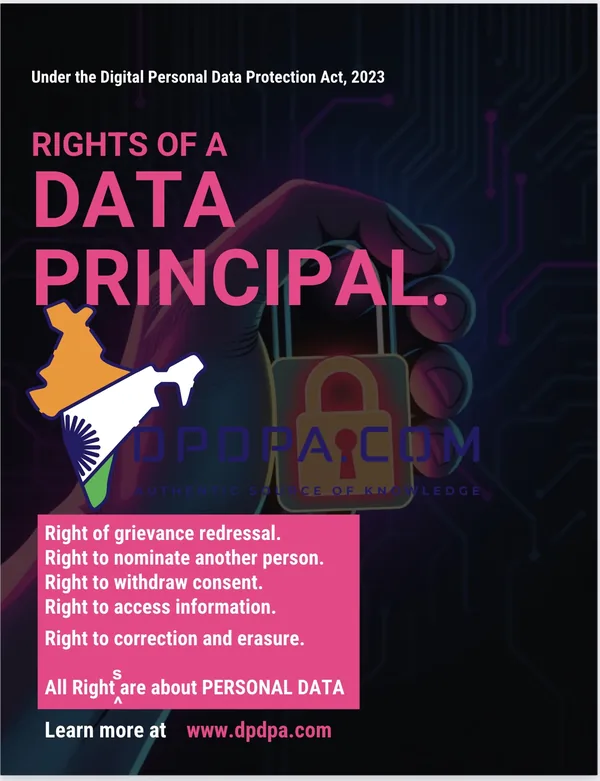
Awareness poster: Rights of a Data Principal under the Digital Personal Data Protection Act, 2023 — grievance redressal, nomination, withdrawal of consent, access to information, correction and erasure. All rights are about personal data.
Awareness poster. Published by dpdpa.com, reproduced as issued.
Who is who

Fiduciary, processor, principal.

Three words the Act uses, and the only three you need for a committee meeting.

The society is the Data Fiduciary

You decide what is collected and why — the member register, gate entries, vehicle records. The Act's duties land on you, and they cannot be signed away to a vendor. What a vendor can do is make them possible to discharge.

Zwangu is the Data Processor

We hold and process the data on your written instructions, under a signed agreement, for the purposes you set. We do not decide what your society collects, and we do not use a society's data for anything but running that society's service.

Your residents are Data Principals

Owners, tenants, their families and their staff. Each has rights under the Act, and each of those rights has a place in the app rather than an email address to write to.

The agreement, before you sign

The processing agreement names the purposes, the retention periods, the sub-processors and the deletion terms. Send it to your society's CA or advocate first. We expect that, and nothing about it is negotiated verbally.

A resident's rights

Six rights, and the screen behind each one.

A right a resident cannot exercise without writing a letter is a right on paper. These sit in the app the resident already has.
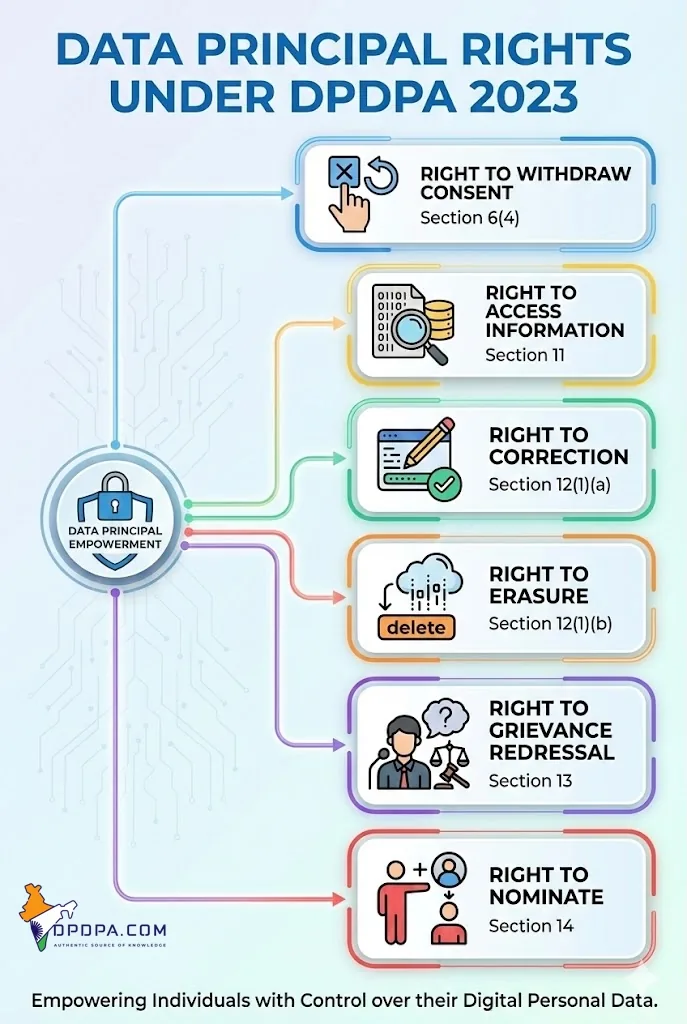
Awareness poster: Data Principal Rights under DPDPA 2023 — the right to withdraw consent, to access information, to correction, to erasure, to grievance redressal, and to nominate, each with its section of the Act.
Awareness poster. Published by dpdpa.com, reproduced as issued.
  • § 6(4)
    Withdraw consentConsent given for a purpose can be pulled back at any time, and the Act asks that withdrawing be as easy as giving was.In the app — each consent is listed with the date it was given and what lapses if it is withdrawn, so nobody withdraws blind.
  • § 11
    Access what is heldA summary of the personal data being processed, what it is being processed for, and who else it has reached.In the app — the resident's own record: flat, contacts, vehicles, passes they issued, receipts. Not their neighbour's, and not the society's ledger.
  • § 12(2)
    Correction and completionInaccurate data corrected, incomplete data completed, stale data updated — on request, by the fiduciary.In the app — a wrong phone number or a misspelt name is corrected by the resident, with the committee notified, not by a request that waits for the next meeting.
  • § 12(3)
    ErasurePersonal data is erased on request, unless keeping it is necessary for the specified purpose or compelled by another law.In the app — statutory financial records are separated from personal data before anything is deleted, and the committee is told exactly which is which and why.
  • § 13
    Grievance redressalA readily available way to complain, answered inside the period the rules prescribe.In the app — raised in the app and tracked to close, so the society can show it responded rather than reconstructing a WhatsApp thread.
  • § 14
    Nominate someoneA resident may name another person to exercise these rights on their behalf in the event of death or incapacity.In the app — a nominee field on the member record, so the answer exists before the family has to ask for it.

On the two correction and erasure sections: the poster cites 12(1)(a) and 12(1)(b). Section 12(1) is the umbrella right; the Act puts the fiduciary's correction, completion and updating duty at 12(2) and the erasure request at 12(3). We cite those, because a committee that looks the section up should find what we said it would.

How the data must be handled

Secure it, do not keep it forever, do not pass it around.

Three duties, plainly stated. Two of them a product can enforce for you; the third is a decision the committee keeps making.

Secure the data § 8(5)

Reasonable security safeguards, to prevent a breach rather than to explain one. TLS 1.3 in transit, AES-256 at rest including backups and gate photographs, row-level scoping so a query cannot cross from one society into another, and an append-only audit log that outlives whoever made the entry. The ciphers, and row-level security →

Limit how long you keep it § 8(7)

Erase once consent is withdrawn or the purpose is served, whichever comes first — unless another law compels you to keep it. Gate photographs are deleted on the period your committee sets, 90 days by default, without anyone remembering to do it. Co-operative law's own retention of the books is the exception, and the app keeps that boundary visible instead of quietly deleting a voucher.

Share it responsibly § 4 · 8(2)

Personal data moves only on authorisation, consent, or a legal basis — and a processor may hold it only under a valid contract. Zwangu does not sell society data, merge it across societies, or build a directory from it. External roles — auditor, returning officer, community manager — are granted by the committee, scoped to what the role needs, and revocable in one tap. How the committee grants and revokes →

And tell people when it goes wrong § 8(6)

A personal data breach is notified to the Data Protection Board and to each affected resident. If one affects your society we tell you what we know and what we are doing, inside the timeline the Act sets, so you can notify as the fiduciary. You will not learn about it from a status page.
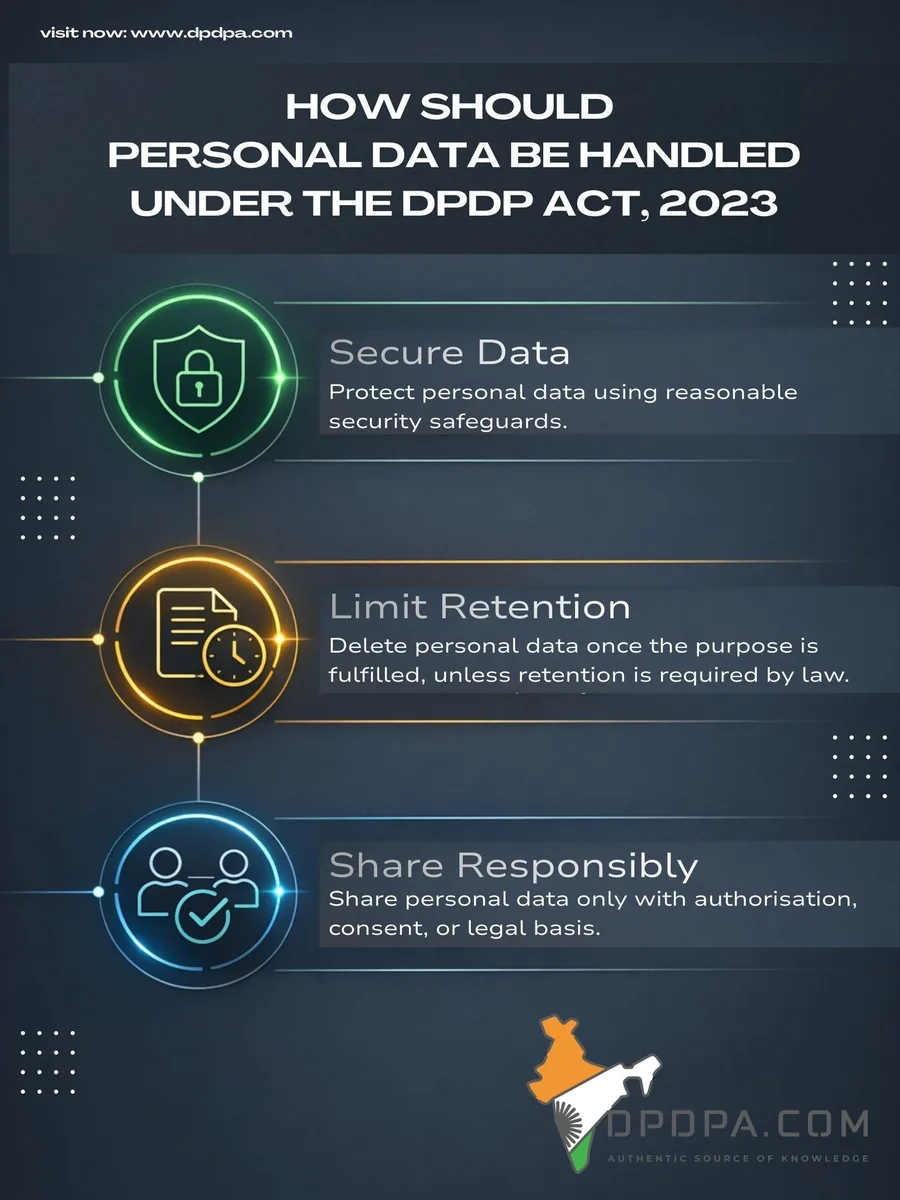
Awareness poster: How should personal data be handled under the DPDP Act, 2023 — secure data with reasonable security safeguards, limit retention by deleting once the purpose is fulfilled unless required by law, and share responsibly only with authorisation, consent or legal basis.
Awareness poster. Published by dpdpa.com, reproduced as issued.
The part the Act does not reach

Your gate register is the risk nobody audits.

The Act covers digital personal data. The visitor book on the guard's desk is not digital — which is not a relief, it is a gap.
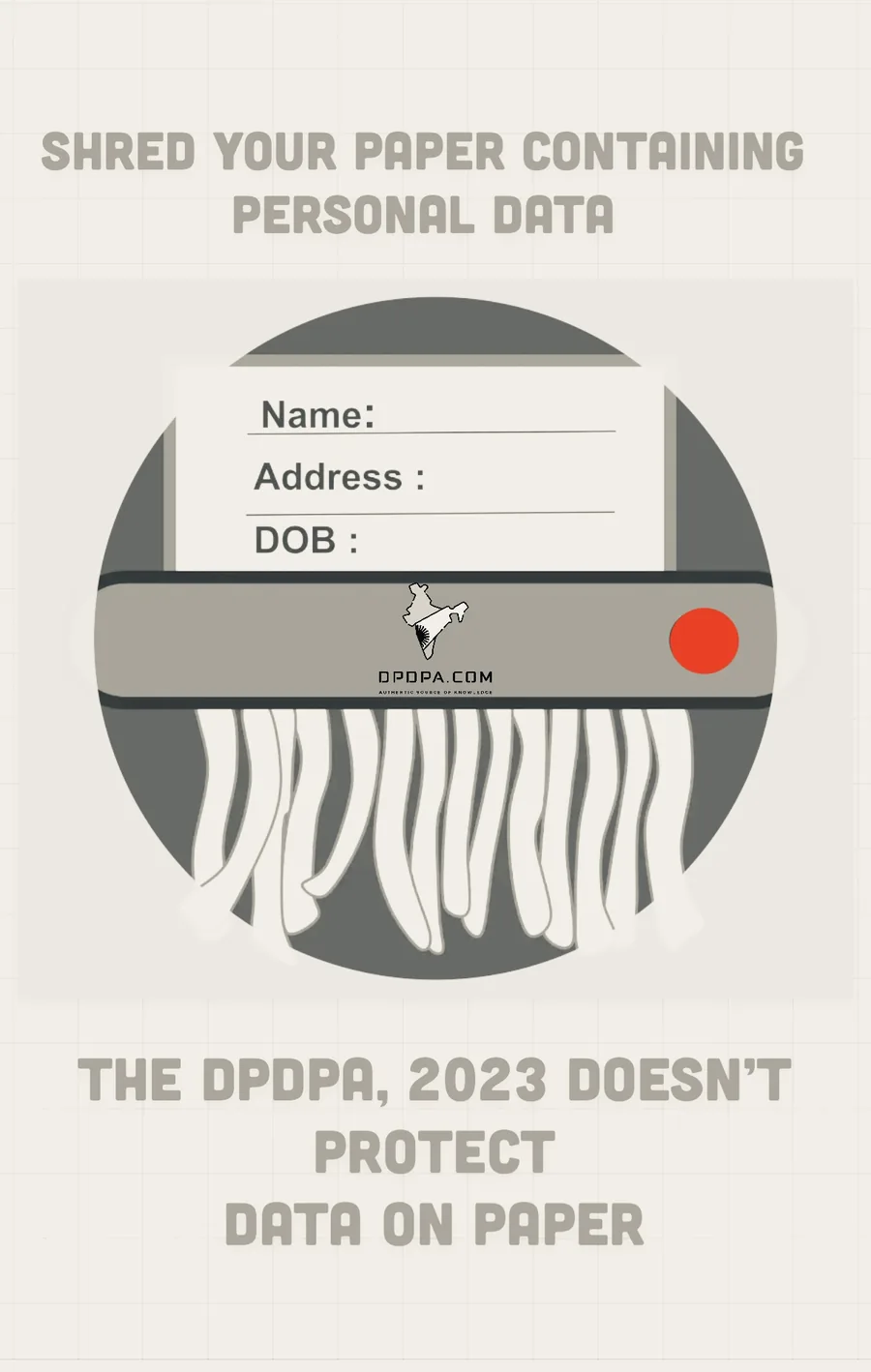
Awareness poster: Shred your paper containing personal data — a sheet printed with name, address and date of birth being fed into a shredder. The DPDPA, 2023 doesn't protect data on paper.
Awareness poster. Published by dpdpa.com, reproduced as issued.

What the Act actually covers § 3(a)

Personal data collected in digital form, or in non-digital form and digitised subsequently. So the register at your gate sits outside the Act — until someone scans it to keep a copy, at which point it is inside, and the society is the fiduciary for it.

What a society keeps on paper

The visitor book at the gate, with names, flat numbers and phone numbers of everyone who came. Photocopies of tenant IDs and police verification forms in the office almirah. AGM attendance sheets with signatures against flat numbers. Cheque counterfoils and the old receipt book. None of it is protected by the Act, and all of it fits in a bag.

So shred what exists — and stop making more

The paper you already hold is the committee's to destroy, and shredding is the right answer, not a locked cupboard. The paper you have not made yet is the part a product can fix: on Zwangu the gate is digital from the first visitor, the AGM roll is a record rather than a sheet, and the receipt book is a ledger entry. There is no register to shred next year because there is no register.

The one place paper still wins

A committee resolution, a signed agreement, a share certificate. Those are documents the society is meant to hold, and the Act has nothing to say about them. Keep them; it is the personal data stapled around them that should not be lying loose.

Duties the committee carries

What the product does for you, and what it cannot.

Purpose limitation

Data collected for gate entry is used for gate entry. Zwangu does not merge a society's data with another's, sell it, or use it to build a directory. If your committee wants to use a resident list for something new, that is a new purpose and it needs a new notice — the product will not do it quietly.

Notice, in language they read

What is collected, why, and who processes it — presented when a resident is added, not buried in a terms page, and available in the app afterwards rather than only at signup.

Children's data

A society holds data about children — a child's name on a gate pass, a face in a photograph. The Act treats that as verifiable-consent territory and bars tracking and behavioural advertising outright. Zwangu does no advertising and no behavioural profiling of anyone, of any age, at all.

Where the data lives

Indian regions only — primary in Mumbai, replica in Hyderabad. No society data, backup or log leaves India. That includes residents' phone numbers, gate photographs and vehicle records.

What we cannot do for you

We cannot consent on your residents' behalf, decide your retention policy, or answer a Data Protection Board notice addressed to the society. Those are the fiduciary's, and a vendor claiming otherwise is selling you something that will not hold.

Questions the committee will ask

Straight answers.

Does moving to Zwangu make us DPDP compliant?
No — and be wary of anyone who says it does. Compliance is a state your society is in, not a product you buy. What Zwangu does is make each duty something you can actually discharge: a notice that reaches residents, a correction that takes a tap, a retention period that enforces itself, a log that shows you responded. The decisions stay with the committee.
We keep a paper visitor register as well. Is that a problem?
Under the Act, no — it is outside its scope until it is digitised. In practice it is the loosest personal data your society holds: names, flat numbers and phone numbers, on a desk, in a book anyone can photograph. Shred the volumes you no longer need, and let the gate module make the next one unnecessary. And note the trap: scanning old registers "for safekeeping" brings them inside the Act, with the society as fiduciary for every page.
Your rights list cites different sections from the poster. Which is right?
Ours, on those two. Section 12(1) is the umbrella right to correction, completion, updating and erasure; the fiduciary's correction duty is at 12(2) and the erasure request at 12(3). Withdrawal of consent at 6(4), access at 11, grievance redressal at 13 and nomination at 14 are as the poster has them.
A resident has asked us to delete everything. Can we?
Personal data, yes. Statutory financial records, no — co-operative law requires the society to keep its books, and the Act permits retention where another law compels it. The app separates the two so the committee can honour the request without breaking the audit trail, and records what was kept and why.
Who signs the processing agreement?
The society, through whoever its bye-laws authorise — usually the secretary or chairman under a committee resolution. It is a document for your CA or advocate to read before signature, not a checkbox during setup.
Does any of our data leave India?
No. Primary in Mumbai, replica in Hyderabad, and nothing — not a backup, not a log, not a gate photograph — leaves the country. Where and how it is held →
Can Zwangu staff read our residents' details?
Only when you raise a support request, only for its duration, and every access is logged and shown to you. Nobody here has standing access to a society's data.

The four awareness posters on this page are published by dpdpa.com and reproduced as issued. They are an explanation of the Act, not of Zwangu; the copy beside each one is ours, and so is the responsibility for it. Nothing here is legal advice — read the Act, and take your agreement to your society's advocate.

Start free pilot

Send the agreement to your CA before you sign it. We expect that.